How to Know if You Can Sing Baritone
You might think that when it comes to vox types, everything depends on song range. Yet the actual notes a person can sing are only a small part of what determines their vocal category. A huge deciding gene is a concept known as timbre, or tonal quality. Timbre is entirely different from a musical notation: A annotation (or pitch) refers to the place a unmarried sound falls on a scale, while timbre is the phenomenon of the specific color or texture of a vocalisation.
Correct about now, you're thinking, "Colour? Texture? How tin can those ideas apply to sound? I can't run across a voice and I certainly tin can't touch 1." And you lot're correct–––you tin't. Voices are subtle and invisible things. Even the experts hold there is very picayune "science" involved when deciding what makes one voice so different from the next. It'due south almost like asking someone to explain how one cloud differs from another; that is, it's virtually impossible. So what do song professionals exercise when they have to describe something equally seemingly indescribable as the human voice? They call on their other senses for help.
Singers, voice teachers, and other vocal scholars similar to autumn back on sight, touch, and taste when discussing specific voices. Vocal professionals volition oftentimes "borrow" words associated with these senses so they can expand the vocabulary used to define the qualities that make a voice special and unique. This is where phrases like "colour" and "texture" come in. For example:
Desire to tell a friend virtually an extraordinarily deep vocalism but can't detect the right words? Endeavor these metaphors on for size:
- "That vocalization makes me recall of the color purple." (eyesight)
- "That phonation is like velvet." (affect/texture)
- "That vocalization reminds me of hot chocolate." (taste)
Comparisons similar these will help get the point across because the brain is pretty good at translating one sensation into another. Your friend may never have heard this particular deep voice, but they'll get the meaning that the gustatory modality of hot chocolate is like a rich, soothing, and beautiful sound.
The timbre of a voice along with its musical range, its tessitura (pronounced tes-encounter-TOO-rah, meaning the span of notes where the voice feels most comfortable), and its flexibility (how fast the voice can motility from note to annotation) combine to grade a vocal category. The standard vocal categories in Western music are:
Soprano
Mezzo-Soprano
Contralto
Tenor
Baritone
Bass
The post-obit is a bones overview of each of these vocalisation types and a wait at how they function in modern and classical music. Every bit y'all read on, though, go along in mind that these voice categories are merely guidelines. There are many variations inside each voice grouping, so much so that song scholars often have problem like-minded on where i voice category begins and some other ends. Get to know these voice types, but don't get too attached––at that place's no "ultimate" example of a voice category. No soprano is more soprano-y than another.
Find Your Vocal Range
Be aware that voices don't settle into their proper categories until well into adulthood.Exercise non utilize this guide as a way of defining your own vocalisation. While one vox type may appeal to y'all more than the others, it is admittedly essential that you practise not attempt to fit your voice into whatsoever specific category––this can exist incredibly unhealthy. Allow your voice time to grow and develop. Bask the sound you have rather than pushing for the sound you'd like to take.
An introduction to opera'south voice types
A option of singers share their skills from the lowest vox type to the highest, demonstrating the power of the bass, baritone, tenor, mezzo-soprano, countertenor, and soprano voices.
The Diva Team:A Look at (Generally) Female person Voices
Welcome to the vocal women's league. The following phonation types represent the many unlike shades of the beautiful female person voice, save for a few exceptions in which specialized male voices join the women'due south team. For the most part, though, these unique sounds––soprano, mezzo-soprano, and contralto––are a woman's domain.
Sopranos
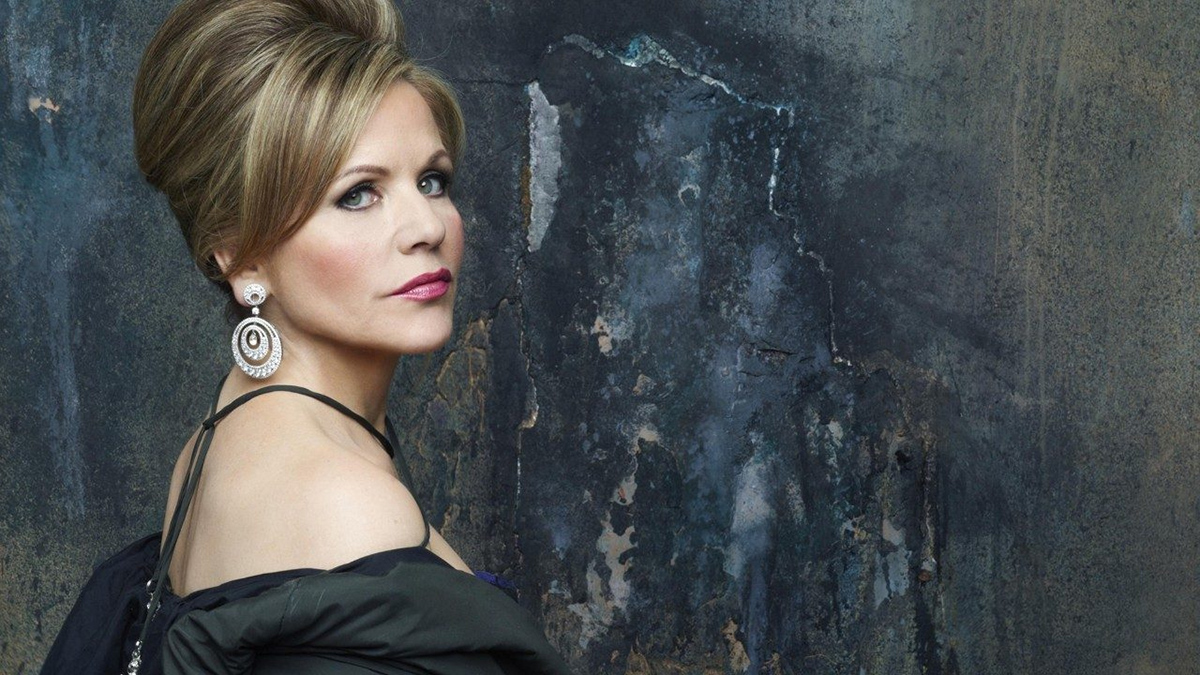 Renée Fleming
This voice is characterized by impressive loftier notes (hence the name, which comes from the Italian "sopra" or "above") and a timbre that usually sounds brighter or more sparkling than the other voice types. Only don't allow the word "brilliant" fool you—sopranos are often capable of immense depth and richness of tone. In opera, sopranos are divided into iii bones groups: coloratura (kuhl-er-ah-TOOR-ah),lyric, anddramatic, with coloratura existence the lightest and most flexible sound, and dramatic existence the darkest and most powerful. ("Lyric" lies more or less in the centre.) Sopranos often sing the tune or chief tune of a piece while the other voices add support or "dorsum-up" harmonies.
Who they are
- Sopranos are usually women, just young boys may likewise fit into this category––their soft and blusterous tone works well in choir music. In add-on, during the 17th and 18th centuries, some men put themselves through concrete operations and rigorous training to exist able to strengthen the uppermost parts of their voice and sing soprano roles.
Adjectives/colors/textures/tastes that tin can be used to describe them
- shimmering, shining, gleaming, bell-like, yellowish, white, silvery, metallic, crystalline, silky, creamy
Who they might play in an opera or a musical
- romantic heroines (ingénues), young women, queens, princesses, angels
Famous examples
- Maria Callas, Renée Fleming, Leontyne Price, Joan Sutherland, Kiri Te Kanawa, Dawn Upshaw, Sarah Brightman, Kristin Chenoweth, Judy Collins, Joni Mitchell (early recordings), Whitney Houston, Mariah Carey, Alison Krauss
Listen:
A soprano performs as The Queen of
the Nighttime in Mozart's The Magic Flute
Mezzo-Sopranos
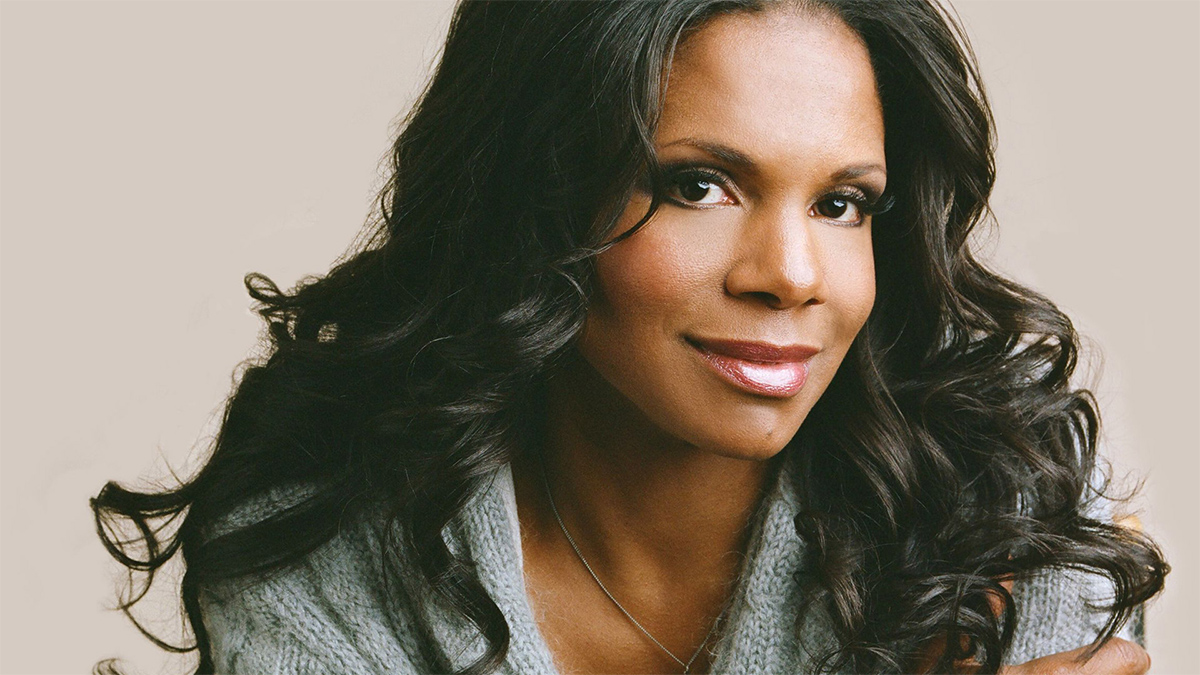 Audra McDonald
Mezzo-sopranos become their name from the Italian prefix "mezzo," meaning "one-half." Although the category translates every bit "half-soprano," at that place's cipher "halfhearted" about the warm but sturdy voices that make up this group. In fact, mezzos often sing just as high equally their soprano counterparts. In improver, operatic mezzos are besides divided into the bones coloratura, lyric, and dramatic groups. What sets mezzos apart are their strong middle voices, their smoldering lower registers, and their lush tone quality. If a mezzo and a soprano were to sing the exact same pitch, the mezzo's note would most likely audio a trivial bit fuller, darker, or heavier (imagine a clarinet playing the same note as a flute). Most female popular and Broadway artists fall into the mezzo category.
Who they are
- Near mezzos are female with the exception of some male person specialists known ascountertenorswho, much like their 17th- and 18th-century predecessors, train their vocal chords to approximate a female mezzo sound. Countertenors are usually only heard today in Baroque opera performances.
Adjectives/colors/textures/tastes that tin can be used to depict them
- nighttime, musky, glowing, fiery, golden, burgundy, coppery, smooth, velvety, chocolate-y
Who they might play in an opera or a musical
- seductive women, older women, queens, mothers, nurses, witches, young men (these roles are known equally "pants roles" and occur often in opera)
Famous examples
- Agnes Baltsa, Olga Borodina, Tatiana Troyanos, Shirley Verrett, Frederica von Stade, Judy Garland, Audra McDonald, Beyoncé, Lea Michele, Celine Dion, Christina Aguilera, Lady Gaga
Listen:
A mezzo-soprano performs
"Habanera" from Bizet's Carmen
Contraltos
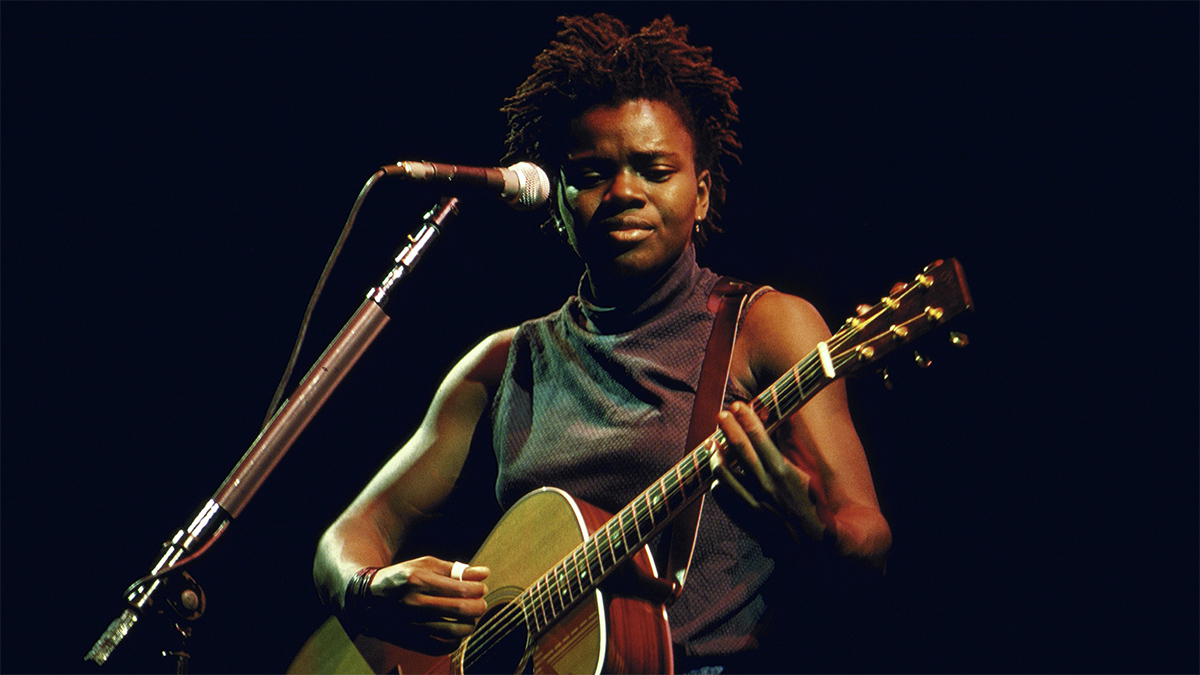 Tracy Chapman
And yous thought the mezzos had deep voices? Checkthese ladies out. Contraltos are arguably the rarest of female vocalism types and they possess a tone so dark they oftentimes give the men a run for their money. If mezzos are like clarinets, contraltos are more similarbass clarinets. The lower annals is the key characteristic of this category, and contraltos know amend than anyone how to brand the most of their low "breast" tones. This doesn't hateful contraltos skimp on the high notes, though––operas often characteristic a coloratura contralto that can reach pretty far up into the vocal stratosphere with lightning speed. Contralto voices play a big part in jazz and pop music, even so, and yous're probably more likely to hear a contralto on the radio or in a cabaret setting than on the operatic stage.
Who they are
- Females
Adjectives/colors/textures/tastes that can be used to describe them
- heavy, strong, bronze, purple, smoky, husky, rich, dark chocolate-y
Who they might play in an opera or a musical
- mothers, grandmothers, world goddesses, witches, nuns or priestesses, military generals (a sort of 18th century mega-pants role)
Famous examples
- Elena Obraztsova, Marian Anderson, Ella Fitzgerald, Tracy Chapman, Cher, Annie Lennox, Toni Braxton
Listen:
Tracy Chapman "Give Me I Reason"
Where Did the Altos Get?
Nowadays, the give-and-take "alto" is a general term used to describe a lower female vocalisation rather than a specific vocal category. Chorus music usually calls for an "alto" function for voices with a strong middle and lower register, merely there'south no existent separate alto vocalism type in Western music. If you hear someone say, "She'southward an alto," what they really hateful is that the singer is a mezzo-soprano or a contralto.
The Broadway Belter
 Idina Menzel
Yous may exist asking yourself, "What kind of singer is a belter?" The "belt" is a kind of vocal trick or stylistic choice, and a "belter" is someone who uses this blazon of singing to their advantage. Belting is a complicated but exciting technique in which singers push the heavier chest voice register up by its natural range. Any vocal category can produce a belt, but the near familiar belter is the mezzo-soprano, who is often showcased in Broadway musicals. Elphaba inWicked? Mezzo. Eponine inLes Misèrables? Mezzo. Elle inLegally Blonde? Mezzo. You get the picture.
Famous examples: Ethel Merman, Patti LuPone, Betty Buckley, Lea Salonga, Idina Menzel, Linda Eder, Sutton Foster
Listen:
Idina Menzel "The Wizard and I"
from Wicked
The Divo Team:A Look at Male Voices
At present for the boy'due south guild of singing. The following phonation types explore all aspects of the male person sound, from the light and lilting to the dark and forceful. No girls allowed—these voices are strictly for the men.
Tenors
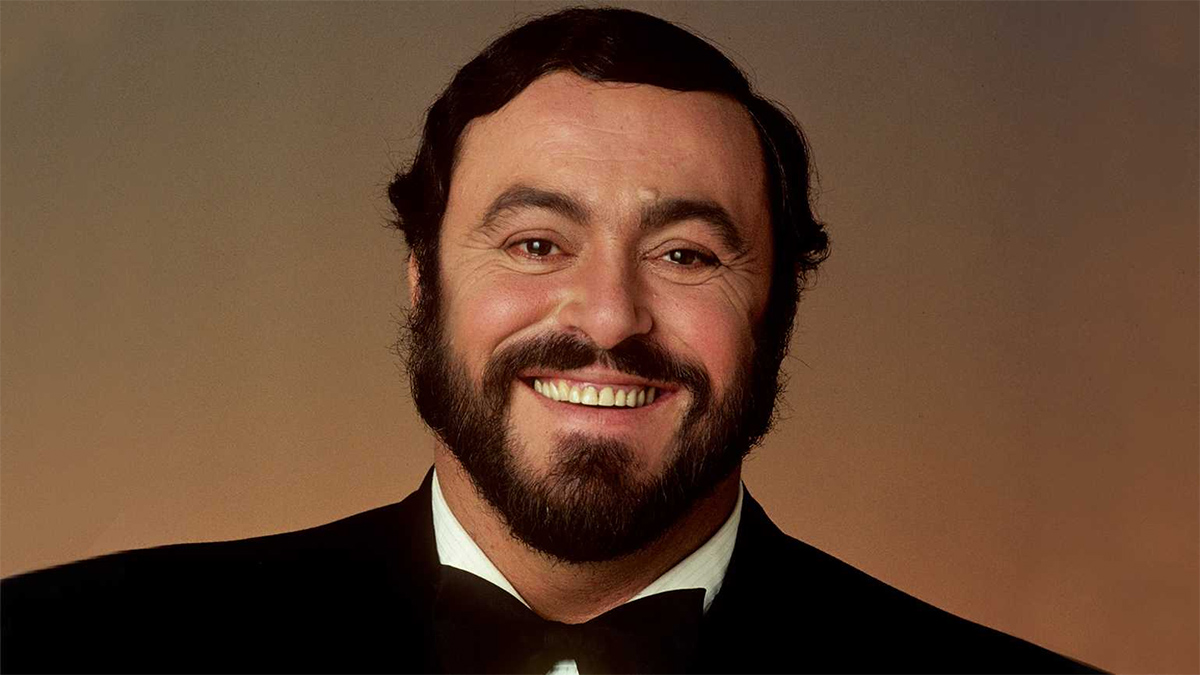 Luciano Pavarotti
Tenors are the highest male voice and, like sopranos, they are capable of delivering thrilling loftier notes and oft take a brilliant shining timbre. Think of them as the trumpet of the vocal orchestra. These singers go their proper name from the Italian "tenere," which means "to agree" because, in very early on music, information technology was their task tohold down the melody and drive the song. This ofttimes remains truthful in today's music, as many of the pb singers in pop groups and rock bands are tenors. In opera, tenors take several subcategories, which range from the softer audio of the tenore buffo (ten-OR-eh BOO-foh, a high-range tenor who sings comedic roles) to the bold and hefty sound of a Heldentenor (HELL-dehn-10-OR, the term for a strong-voiced tenor who sings heroic roles in lengthy German operas).
Who they are
- Mature males. Information technology's important to note that, although they sing some pretty loftier notes, tenors are unlike from immature boys whose voices haven't changed all the same. As singing skilful Richard Miller puts it, a tenor voice is a full and energetic adult sound.
Adjectives/colors/textures/tastes that tin can be used to draw them
- vivid, dazzling, clear, brassy, ringing, sunny, yellowish, orange, metal, tinny, juicy, spicy
Who they might play in an opera or a musical
- leading men, romantic heroes, young boys, princes, knights, soldiers
Famous examples
- José Carreras, Enrico Caruso, Franco Corelli, Luciano Pavarotti, Juan Diego Flórez, Paul McCartney, Chris Martin (lead singer of Coldplay), Justin Timberlake
Listen:
A tenor sings "La Donna eastward Mobile"
from Verdi's Rigoletto
Baritones
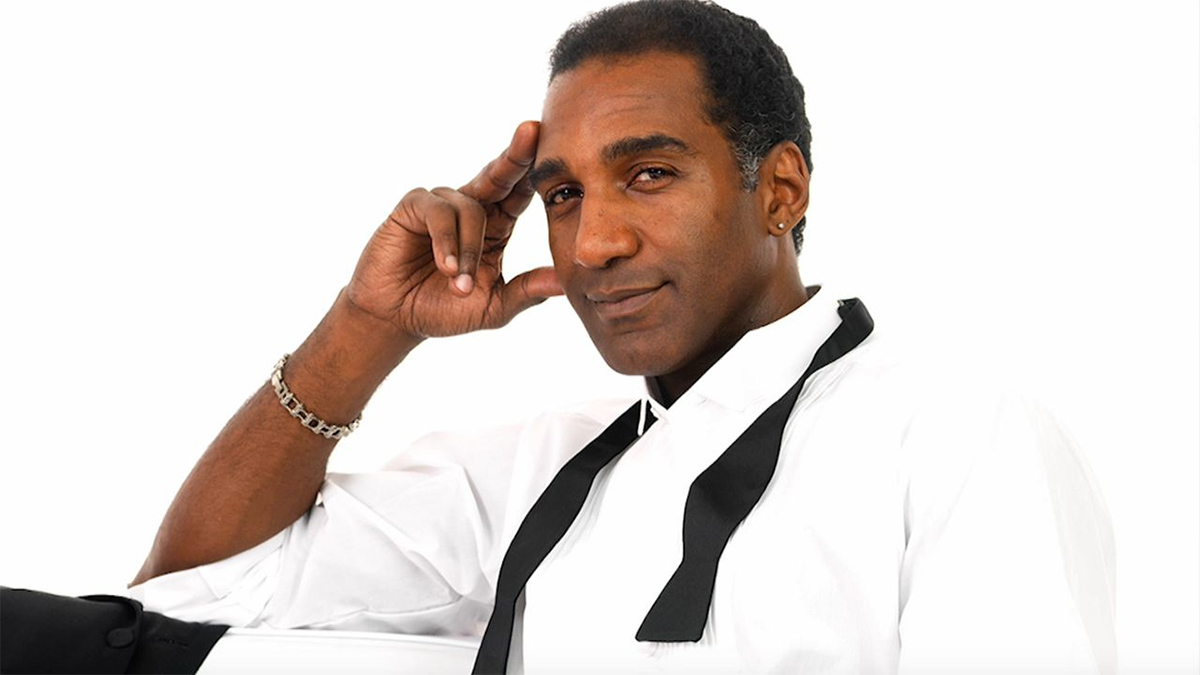 Norm Lewis
The about common of all male voices, this category occupies the wide range of song timbres between the tenor and the bass. Interestingly, this voice blazon wasn't officially acknowledged until the 19th century when, as Miller puts it, composers defenseless wise to the fact that using vocal variety and "contrast" made for much more exciting music than just dividing parts between the guys who could sing loftier and the guys who could sing low. Every bit a result, the baritone phonation, recognizable past its glorious eye annals, came into style and was championed in many 19th-century operas, peculiarly those of Verdi.
As with all other categories, the baritone comes in many forms, including the lyric (a lighter phonation often featured on the classical concert stage) and the dramatic (a darker tone used in lead operatic roles). In contemporary music, baritones are more probable to bear witness upwardly in the country western and R&B genres than in pop or stone ballads, which tend to favor tenor voices.
Who they are
- Males
Adjectives/colors/textures/tastes that can be used to depict them
- smooth, warm, chocolate-brown, tan, velvety, lush, plush, rich, coffee-like
Who they might play in an opera or a musical
- the tenor's rival for the soprano, seductive men, the tenor'due south all-time friend, husbands, older heroes, fathers
Famous examples
- Norm Lewis, Thomas Hampson, Dmitri Hvorostovsky, Sherrill Milnes, Leonard Warren, Toby Keith, Brian Stokes Mitchell, Frank Sinatra, Harry Connick Jr., Luther Vandross
Listen:
A tenor sings "Largo al Factorum"
from Rossini's The Barber of Seville
Basses
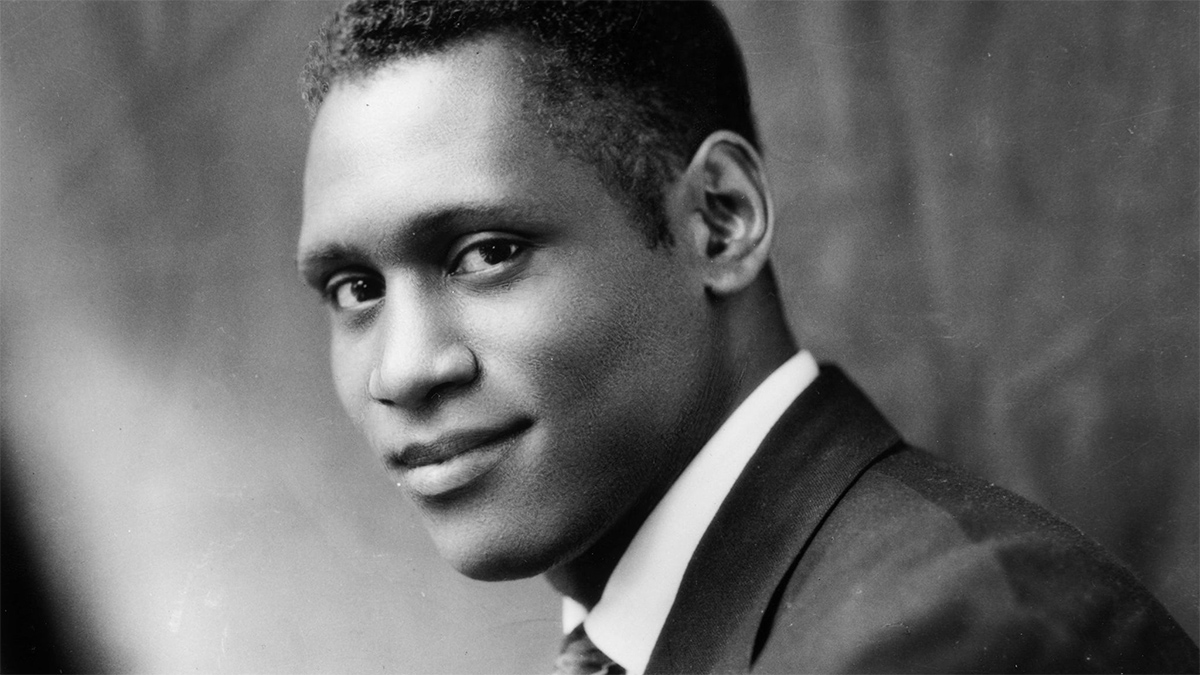 Paul Robeson
The name says it all. These men brand upward the bottom of the musical staff, and their incredibly deep tones are a rare but essential function of music making. Basses do for low notes what sopranos practise for high notes. Yet what makes basses and so special isn't so much the depth of their notes, but the volume and strength with which they can sing them. Pitches at the bottom of the scale are notoriously difficult for the ear to pick upwardly, then recall of the skill involved in making a magnificent low note audio loud enough to be heard over an unabridged orchestra. Kind of amazing, wouldn't y'all say?
The potential of the powerful bass sound wasn't lost on composers. In fact, many opera composers used the bass voice to represent characters that are literallyout of this earth, like gods and devils. In that location'south as well a special subcategory of the operatic bass voice known equally the basso buffo , which exploits the depression range for comic effect. Basses are also an important part of jazz and R&B music; their warm and beautiful sound is instantly calming and makes for easy listening.
Who they are
- Males
Adjectives/colors/textures/tastes that tin can be used to describe them
- dusky, dark, heavy, blue, royal, marble-similar, wool-like, thick, dense, fe-like, espresso-like, dark-chocolate-y
Who they might play in an opera or a musical
- gods, emperors, kings, devils, fathers, grandfathers, priests, monks
Famous examples
- Boris Christoff, Nicolai Ghiaurov, René Pape, Ezio Pinza, Paul Robeson, Barry White
Mind:
A bass sings the prologue
from Mussorgsky's Boris Godunov
Between the (musical staff) Lines:Bass-Baritones
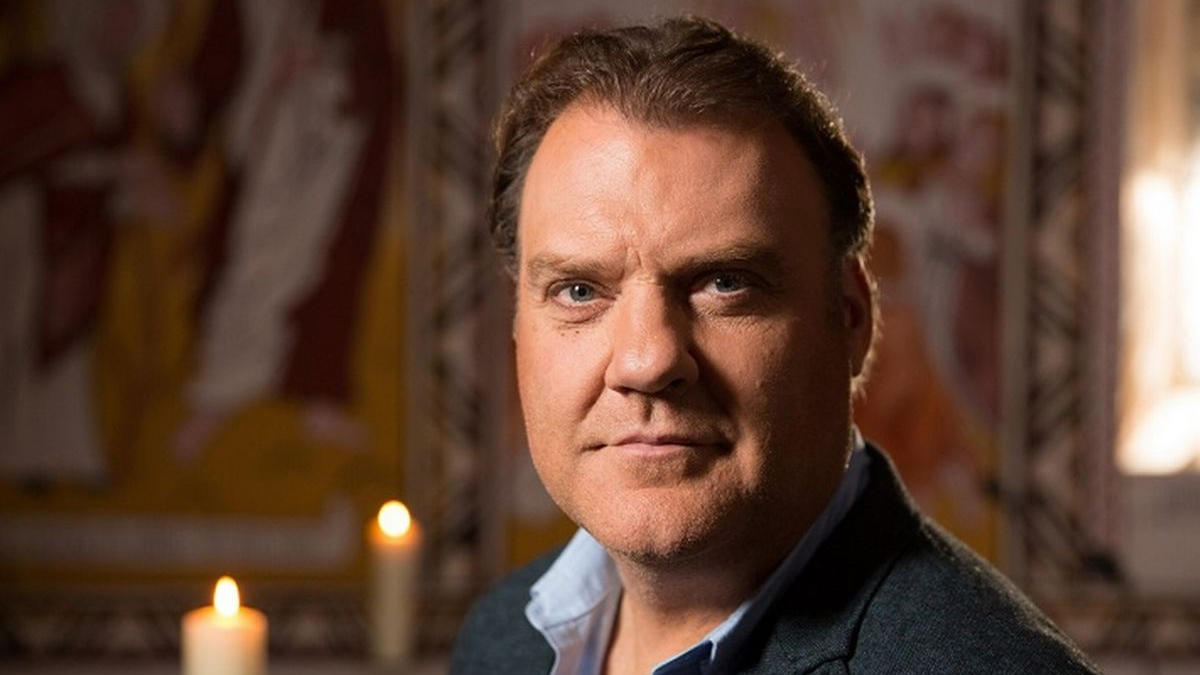 Bryn Terfel
So many male voices possess qualities ofboth the baritoneandthe bass that many vocal professionals experience they deserve their ain category. Say how-do-you-do to the bass-baritone. He has roughly the aforementioned vocal range every bit a dramatic baritone, but his timbre carries enough extra weight and color to be considered bass-like. Look out for his featured roles in many a Mozart opera. Figaro and Don Giovanni are bass-baritone favorites.
Famous examples: Bryn Terfel, Samuel Ramey, José Van Dam
FYI: You lot'd be hard-pressed to find a singer in pop or rock music that makes use of this kind of timbre. It's really more of an operatic voice.
Listen:
A bass-baritone sings from
Mozart's The Marriage of Figaro
Vocalization types | Opera 101
Confused when someone says they are a mezzo? Maybe this will clear things up a bit!
Why does your voice change as you get older?
The human voice is capable of incredible variety and range. As nosotros historic period, our bodies undergo ii major changes which explore that range. So how exactly does our vox box work, and what causes these shifts in speech? Shaylin A. Schundler describes how and why our voices change when we get older.

-
Writer
Eleni Hagen
-
Editor
Lisa Resnick
Tiffany A. Bryant -
Producer
Kenny Neal
-
Updated
January 25, 2022
-
Sources
-
Works Cited
Related Resources
American Voices
Renée Fleming and colleagues from the song fields of classical, musical theater, jazz, gospel, country, and pop lend their talents and expertise to an unprecedented journey of vocal discovery aimed at educating young singers and seasoned vocalists akin.
Viva La Diva!
A beginner's guide to some of opera'southward virtually challenging female person roles and a unique look at how opera does girl power.
American Voices: Classical Singing
Featuring Eric Owens with Edith Bers, Anthony Freud, and Matthew Horner
Opera
Become out your opera spectacles and gear up to take a wait at the history and evolution of an art grade over four hundred years former. Learn how singers railroad train and condition their voices, get familiar with some of the stage's nigh tragic honey diplomacy, and detect how theatre and music combined can tell ballsy stories in unforgettable ways.
Opera-tunity Knocks
A guide for all opera newbies, both young and old, with some hints as to how to at-home the opera skeptic.
Taking Care of Your Phonation
Want to sing? Expert! Been watching American Idol and think you can do improve? Here's a few myths about singing and a few things to keep in listen.
The Ins and Outs of Trying Out
If you lot opt for a career in opera or musical theater, you lot'll be facing auditions all the time. Audition criteria vary from competition to contest, show to evidence, and director to director, only hither are five of the (very) basic things to keep in mind
No Singer is an Island
Singing is a completely collaborative art form. You cannot go information technology alone. Here's a wait at vi of the people that will help you lot along the way
What Information technology Takes to Become a Professional Vocaliser
If yous're serious about pursuing a singing career, consider the following points advisedly every bit you embark on this challenging career path.
Surviving Schoolhouse Chorus
Chorus isn't as complicated as you think. Here'southward a unproblematic guide to the world of school choir. Sit upwardly direct in your chair, have a deep breath, and read on.
The Real Life of a Singer
Some basics on studying voice, preparing music, and getting the give-and-take out about your singing
How to Sing in an Ensemble
Congratulations! You lot're singing in an ensemble. Never sung with a chorus before? We're going to tell you everything y'all demand to know.
Kennedy Center Education Digital Learning
Eric Friedman
Director, Digital Learning
Kenny Neal
Manager, Digital Instruction Resources
Tiffany A. Bryant
Assistant Manager, Audience Enrichment
Joanna McKee
Program Coordinator, Digital Learning
JoDee Scissors
Content Specialist, Digital Learning
Connect with us!


Generous support for educational programs at the Kennedy Centre is provided by the U.Southward. Department of Education.
Gifts and grants to educational programs at the Kennedy Centre are provided by A. James & Alice B. Clark Foundation; Annenberg Foundation; the Andrew W. Mellon Foundation; Bank of America; Bender Foundation, Inc.; Carter and Melissa Cafritz Trust; Carnegie Corporation of New York; DC Commission on the Arts and Humanities; Estée Lauder; Exelon; Flocabulary; Harman Family Foundation; The Hearst Foundations; the Herb Alpert Foundation; the Howard and Geraldine Polinger Family Foundation; William R. Kenan, Jr. Charitable Trust; the Kimsey Endowment; The Male monarch-White Family Foundation and Dr. J. Douglas White; Laird Norton Family Foundation; Little Kids Rock; Lois and Richard England Family unit Foundation; Dr. Gary Mather and Ms. Christina Co Mather; Dr. Gerald and Paula McNichols Foundation; The Morningstar Foundation; The Morris and Gwendolyn Cafritz Foundation;
Music Theatre International; Myra and Leura Younker Endowment Fund; the National Endowment for the Arts; Newman's Own Foundation; Nordstrom; Park Foundation, Inc.; Paul M. Angell Family unit Foundation; The Irene Pollin Audience Development and Community Engagement Initiatives; Prince Charitable Trusts; Soundtrap; The Harold and Mimi Steinberg Charitable Trust; Rosemary Kennedy Pedagogy Fund; The Embassy of the United Arab Emirates; UnitedHealth Group; The Victory Foundation; The Volgenau Foundation; Volkswagen Grouping of America; Dennis & Phyllis Washington; and Wells Fargo. Boosted back up is provided by the National Commission for the Performing Arts.
The content of these programs may have been developed under a grant from the U.Southward. Section of Education but does non necessarily represent the policy of the U.S. Department of Educational activity. You lot should not assume endorsement by the federal regime.
Source: https://www.kennedy-center.org/education/resources-for-educators/classroom-resources/media-and-interactives/media/opera/understanding-different-voice-types/
0 Response to "How to Know if You Can Sing Baritone"
Post a Comment